
Our mission is to demystify the value your company is looking to realize from BI and ensure you develop programs that are realistic and achievable. Our services break down into 5 main categories which cover the greatest areas of risk we help you manage as you brave the challenges of implementing Business Intelligence.

Deciding to kick off or extend Business Intelligence in your organization is a major deal. It's not hard to read about companies who have spent a lot of time and money on some really cool tools, only to watch those tools sit unused .. or at best, function as high-end data extraction programs with the major analysis still taking place in Excel. You can't afford to walk down that path.
Instead, you need to take realistic stock of who you and your people are, then fit a strategy to that perspective. This is the only way you will connect the people who will use the new tools to make decisions, to the process of creating those tools. Unless you are already a data-driven culture, there will typically be 1 or 2 business stakeholders that your project should partner with and really understand what they need to know in order to be successful. Building your architecture around their immediate need, with a perspective of how to expand beyond that initial area, will result in the minimum spend to build a base and realize some type of benefit "quickly". We can help you build this road map to tangible results.

With a realistic BI Strategy that takes into account who you are as a company, the next step is to describe the initial benefit you're going after and define what information and visualizations the business partner needs to realize those benefits. Alignment is the critical capability. What makes perfect sense from a technologist's point of view is often out of sync with how a business partner will use information. Bridging this gap is essential.
This is the time when there is no substitute for having the right person. You either need someone from your IT group who has lived with the business partners for a long time, and understands how they think and how they run their activities. Or you can bring in someone who has that special mix of technical know-how and the experience of managing a P&L. But whoever it is, that person must have the respect of both the technology developers and the business partners .. those two groups need to move forward in lock step. If you have that special person in your organization already, well done. If not, we can build those critical relationships quickly to describe and quantify the target benefits, and then make sure the tools the business expects are those that are actually built.
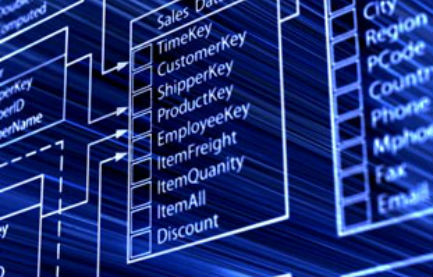
One of the biggest mistakes companies make when upgrading their BI is to believe that new tools will somehow create sense and order out of corrupted and incomplete data. While it is sometimes feasible to use statistical analysis and/or to match data from other systems to fill in information holes, the great likelihood is that, if you want to benefit from the insights promised by BI, you'll need to roll up your sleeves and fix some of your data.
So what data needs to be fixed? What is foundational? What is tangential but essential for the benefits you are targeting? What fixes need to be manual and which can be automated? Do you truly understand and have architected for the relationships that exist between your various legacy systems? And as you develop a point of view as to what clean data looks like and how you will fix, what processes are you putting in place to govern your data? How will you ensure quality and monitor for exceptions? It is very appealing for companies that are moving from small to mid-sized to bring in the cool BI tools. But unless you have the appetite to think through these questions and understand the data you are producing, your adventure in BI will be confusing and frustrating. We can help you plan your data strategy and help you produce the kind of quality that generates actionable insight.

Business Intelligence has to make sense of many different types of data from many different types of sources, and is used by many different types of users. Nonetheless, there is a basic frame that generally suits: BI typically requires a specialized data repository that is specifically designed for the heavy read-only queries that it will have to serve up. That is the core part of the frame. Then, you have to design processes to move the data from your transactional systems to that repository on one side and on the other side, you have to adopt tools and a measurement philosophy to present the data to the users. Designing the tools, the processes and organization to realize this frame and maintain it is the role of architecture and getting this right creates a solid foundation for every BI project you'll start in the following 5-10 years.
Is your data structured? What's the volume and typically monthly/yearly growth? What is the investment in your existing tools and infrastructure? What types of integrations are required? What level of personnel can you absorb to manage new infrastructure and tools? Are you trying to tackle BI around the whole enterprise or just one subject area? Taking that scope into account and thinking about the likely future growth in business functions, where are the risks that you need to manage in future-proofing the architecture? Our experts understand how changes in the business stress architecture and how to design so that your technology platform can expand and answer new questions.

Second to a major ERP implementation, BI projects span the full scope of an enterprise like no other project. Many IT-focused PMOs struggle to integrate the variety of tasks and monitoring that is required over all the IT and business resources. And many Business-focused PMOs will underestimate the complexity in the technology, thinking that this can be managed as their typical business projects are overseen. The project begins to fall behind and costs overrun the budget.
BI projects are famous for this type of outcome. And many times, by the time the project manager has gotten in, it's too late. If the expectations of the project outstrip the resources and realistic scope, a PM won't help other than to raise the alarm and attempt to re-align the expectations. But even when expectations are realistic, managing BI is complex. Whether the project has been set up well or is headed for challenges, we can help reduce the complexity and help you get your arms around what you need to execute.